Thinking about trading the flats for a hillside view? If the pull of crisp canyon air, twinkling city lights, and quick access to studios has you curious about the Hollywood Hills, you are not alone. This guide breaks down what day-to-day life really feels like, from commutes and parking to wildfire prep, renovation rules, and the trade-offs that come with those sweeping views. By the end, you will know what to expect and how to plan your search with confidence. Let’s dive in.
Hollywood Hills at a glance
Set north of Hollywood Boulevard along winding canyons and ridgelines, the Hollywood Hills is a cluster of hillside neighborhoods with a distinct residential feel. You get a quieter pace than central Hollywood or West Hollywood, but you are still close to nightlife, studios, and major corridors. Elevation shapes everything here, from the views to the roads, so the experience varies street by street.
Most areas have a boutique, low-key character. You will find everything from secluded estates and architect-designed homes to mid-century houses and smaller canyon cottages. Some pockets feel almost woodland with narrow roads and dense trees, while others feel more suburban with a few neighborhood services near canyon entrances.
Micro-areas to know
- Beachwood Canyon: Village-style core, access to Griffith Park and Hollywood Sign pathways, popular with hikers.
- Laurel Canyon: Music-history roots, a mix of restored mid-century homes and newer builds.
- Nichols Canyon and Outpost Estates: Steep, private streets with many custom homes.
- Mulholland Drive ridgeline: A scenic, curving drive with homes oriented to sweeping city or ocean views.
Each micro-area has its own vibe, topography, and access patterns. Your daily routine will depend on the specific canyon or ridgeline you choose.
Daily rhythm and commute
Life in the Hills runs at a slower clip than the flats, but morning and evening patterns are shaped by commuter flows. Road-based commuting is standard, and access to US 101, the Westside, Downtown, Burbank, and Studio City can be convenient depending on your exact location and time of day.
Expect narrow, winding roads and steep driveways. Peak-hour traffic can move slowly through canyon feeders, and some streets offer limited visibility or single-lane sections. If you work in entertainment, proximity to Hollywood, Universal City, and Burbank is a key advantage, and many residents keep flexible or remote schedules to avoid rush periods.
Getting around and parking
Public transit inside the Hills is limited. You can reach Metro Red Line stations and bus routes in lower Hollywood, but most daily errands require a car or rideshare. Street parking can be tight on narrow roads, and restrictions are common. Guests and service vehicles need planning, and some areas include gated or private streets.
If parking is a priority, look closely at garage solutions, driveway slope, and street rules during showings. Visit at different times of day to see the real parking picture.
Dining, shops, nightlife
You will find small markets, cafés, and services near canyon entrances, but most broader dining and nightlife happens down the hill. Residents often head to Hollywood Boulevard, the Sunset Strip, West Hollywood, or Studio City for options. Inside the Hills, the scene is more subdued and residential.
This balance is part of the appeal. You get quiet evenings at home with city lights below, and quick access to buzzier corridors when you want it.
Parks and outdoor access
If you love the outdoors, this is a standout feature. The Hills offer direct access to Runyon Canyon, Griffith Park, and numerous trailheads. You will see many dog walkers, and some areas allow off-leash times or zones. On weekends, trailheads can be lively, so factor popular routes and access into your neighborhood choice if you prefer low foot traffic.
Privacy, tourism, filming
Tourism is part of the landscape. Proximity to the Hollywood Sign, Mulholland scenic drive, and well-known lookout points brings tour vans and sightseeing traffic to certain pockets. Filming activity occurs on streets and at homes, with occasional permits and temporary closures.
If privacy matters to you, evaluate sightlines, common tour routes, and whether the street attracts hikers or vans. Many residents value privacy, and high-profile subareas can draw more attention, so this is an important part of due diligence.
Noise and light
Hillside living comes with unique sounds. You may hear hillside wind, wildlife, helicopters, or nightlife from nearby corridors. Noise levels vary by elevation and proximity to major roads or venues. Ridgeline homes offer dramatic night views, and they can also experience more light from the cityscape. Walk the property at night to experience the true environment.
Homes and architecture
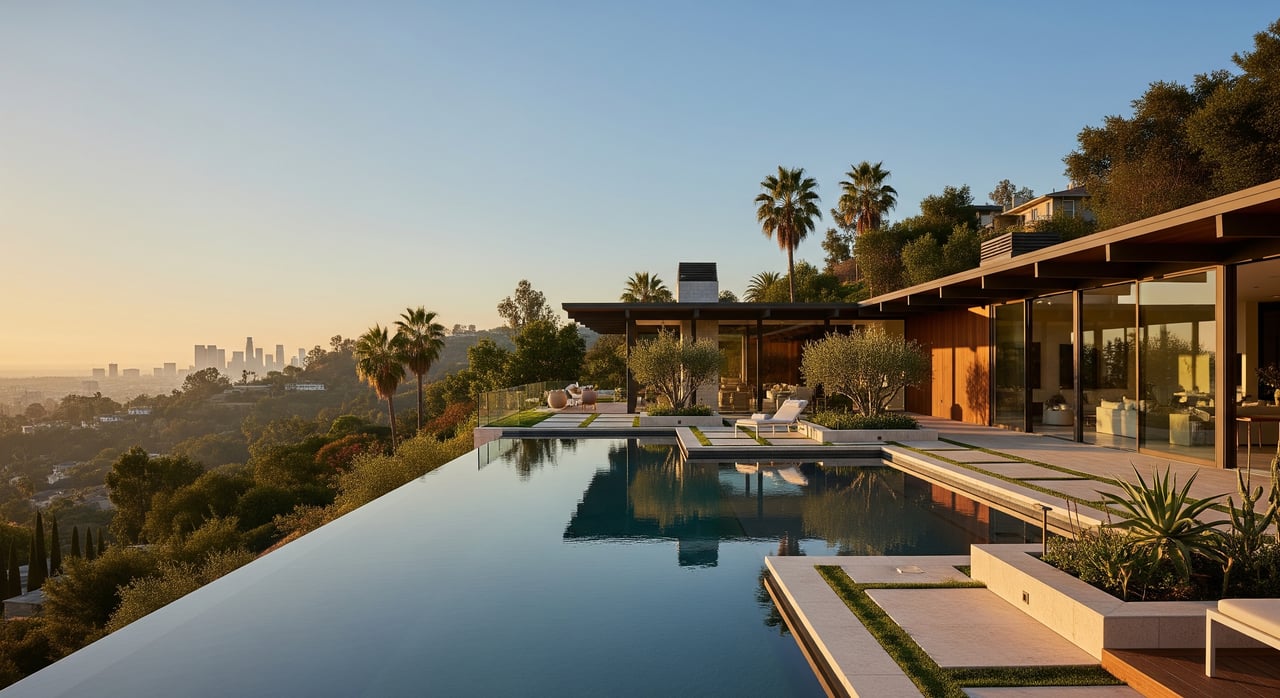
Single-family homes dominate, with a wide mix of styles. You will see mid-century modern, Spanish Colonial Revival, Mediterranean, contemporary glass boxes, and custom hillside architecture. Multi-family buildings appear mostly on lower slopes and near major roads.
On the canyon floors, smaller cottages and mid-century homes are common. On higher ridges, contemporary estates, view houses, and custom builds are the draw. The age and style of the home will guide your inspection focus, especially for systems and structural details.
Price ranges and market
Prices sit above the Los Angeles median, with a wide spread between canyon cottages and luxury estates. Smaller homes often land in the low to mid seven figures, ridge-top properties commonly reach several million dollars, and the top tier can extend into double-digit millions. Inventory is typically tight for well-located homes and can shift quickly with interest rates and demand, including interest from entertainment and tech professionals.
Long-term rentals exist, though supply can be limited in certain micro-areas. Short-term rentals face city regulations, so verify rules before you plan any rental strategy.
Taxes, insurance, costs
California property taxes are shaped by Proposition 13, plus local assessments. Hillside homes often carry higher homeowners insurance premiums because of wildfire and terrain risks, and some buyers face higher deductibles or added requirements. Maintenance is another key factor. Retaining walls, slope drainage, vegetation management, and brush clearance for defensible space add ongoing costs.
Before you buy, price out insurance options and annual maintenance so you understand the full carrying cost, not just your mortgage payment.
Building and renovation realities
Hillside renovation requires planning and patience. Grading, retaining walls, and structural changes often require geotechnical reports and approvals from the City of Los Angeles Department of Building and Safety, and potentially the Department of City Planning. Special hillside rules control grading, slope stability, and visual impacts, which can add time and cost to expansions.
Older homes may need seismic retrofits, updated electrical or plumbing, and termite work. If you are considering a project, budget for permits, engineering, and specialized contractors. Your timeline and costs will likely look different than a similar project on flat land.
Safety and wildfire
The Hollywood Hills sit in an urban wildland interface, so brush fires are a real consideration. Insurance availability and pricing are influenced by wildfire exposure, and residents are expected to maintain defensible space and follow vegetation rules. Common upgrades include ember-resistant roofing, spark arrestors, and clear evacuation routes.
Steep slopes and seasonal rains also create landslide and erosion risks. Retaining walls, proper drainage, and engineered stabilization are frequent inspection items. A current geotechnical report is strongly recommended for steep lots or where there are signs of prior movement.
Connectivity and services
Most properties connect to city water and sewer, but a few outliers can have private arrangements, so verify during due diligence. Internet and cell coverage are generally good in populated pockets, though steep terrain and trees can create dead zones. Trash and recycling are provided by the city, with logistics adjusted for narrow streets.
If you work from home, test connectivity at the property. If you entertain often, clarify trash, recycling, and bulky item pickup so service needs match your lifestyle.
Buyer questions to ask
- How long is the commute to your studio or office at different times of day?
- What is the parking situation for guests and vendors on your street?
- How private is the property, and are there common tour or hiking routes nearby?
- What is the nighttime sound profile and light exposure?
- What will insurance cost given wildfire exposure, and what upgrades are required?
- How complex or expensive would your desired renovation be under hillside rules?
- Are there HOA fees, gate maintenance costs, or private street agreements?
- What are the utility connections, including sewer versus septic and any easements?
Smart due diligence steps
- Verify zoning and hillside ordinances with city planning, and review permit history with building and safety.
- Order a geotechnical report for steep or complex lots, especially if there are retaining walls or signs of movement.
- Get specialized inspections for structure, roof, drainage, and slope stability.
- Check wildfire hazard maps and secure insurance quotes early, including defensible space requirements.
- Visit multiple times to test traffic, noise, and parking at morning, evening, and weekend hours.
- Confirm utility connections, water main location, and easements that affect access or building rights.
- Review evacuation routes and local fire resources, and understand single ingress or egress constraints.
- Ask about private street or gate agreements and any neighborhood covenants.
- If privacy matters, research tourist patterns, filming activity, and prior high-profile occupancy.
Key trade-offs to weigh
- Views and exposure: Iconic views often come with more wind, maintenance, and higher carrying costs.
- Privacy and access: Secluded parcels can mean longer drives and slower emergency access.
- Nature and convenience: Trails and open space are close, but walkable commercial options are limited in many pockets.
Is the Hills life for you?
If you value privacy, nature, and views, and you are comfortable planning around parking, wildfire readiness, and winding roads, the Hollywood Hills can be an exceptional fit. You will trade some convenience for a quieter, more scenic daily routine, with fast access to studios and city life when you want it. Success comes from knowing your micro-area, budgeting for hillside maintenance, and doing thorough due diligence.
When you are ready to explore specific canyons, compare renovation paths, or structure a competitive offer, connect with a local advisor who pairs boutique service with financing and project expertise. For a tailored plan and a seamless search or sale, reach out to Mark Gallandt. Let’s connect.
FAQs
What is the commute like from the Hollywood Hills?
- Road-based commutes vary by canyon and time of day, with narrow, winding streets and peak-hour slowdowns; access to US 101 and nearby studio hubs can be convenient from many areas.
Are there walkable amenities in the Hollywood Hills?
- Inside the hills, amenities are limited to small markets and cafés near canyon entrances; for broader dining and nightlife, residents usually head to Hollywood, the Sunset Strip, West Hollywood, or Studio City.
How risky are wildfires in the Hollywood Hills?
- The area is an urban wildland interface, so wildfire risk is material; defensible space, vegetation management, and insurance planning are important parts of homeownership here.
What types of homes are common in the Hollywood Hills?
- You will find a mix of single-family homes, from mid-century and Spanish styles to contemporary glass and custom hillside architecture, with multi-family mostly on lower slopes.
How expensive is renovation on a hillside lot?
- Hillside projects often require geotechnical reports, structural engineering, and permits under special hillside rules, which can add time and cost compared with flat-lot renovations.
Is parking difficult in the Hollywood Hills?
- Many streets are narrow with restrictions, and driveways can be steep; plan for limited guest parking and confirm garage access and street rules during due diligence.
Are there tourism impacts near the Hollywood Sign and Mulholland?
- Some streets see tour vans, hikers, and scenic-drive traffic; if privacy is a priority, evaluate sightlines and local patterns before you buy.