Looking at homes in Mid-Wilshire can feel a little like walking through a living design timeline. One block may feature arched stucco facades and clay tile roofs, while the next shifts into Tudor details, Colonial Revival symmetry, or a later apartment building with Art Deco flair. If you are buying, selling, or simply trying to understand what gives this part of Los Angeles its identity, it helps to know which architectural styles show up most often and what details matter most. Let’s dive in.
Mid-Wilshire has a layered architectural identity
Mid-Wilshire is not defined by one single look. According to Los Angeles City Planning, the area is better understood as a collection of adjacent historic residential pockets, including Miracle Mile, Miracle Mile North, Wilshire Park, Windsor Square, Carthay Circle, Carthay Square, and Country Club Park.
Across these neighborhoods, much of the housing stock was built from the 1910s through the 1940s. That is why you often see a mix of period-revival homes, consistent setbacks, and mature street trees, rather than one uniform architectural style from block to block.
For you as a buyer, that variety is part of the appeal. It also means the feel of a street can change quickly, even within the same broader neighborhood, so it is worth paying attention to the specific pocket and the immediate streetscape around any home you are considering.
Spanish Colonial Revival leads the way
Why this style stands out in Mid-Wilshire
If there is one style most closely associated with Mid-Wilshire homes, it is Spanish Colonial Revival. SurveyLA identifies it as a style widely used in Los Angeles from 1912 to 1948, especially in areas that developed heavily during the 1920s and 1930s.
In Mid-Wilshire, this style shows up again and again because it fits the era of development in many of the neighborhood’s best-known residential districts. It also pairs naturally with Southern California’s climate and indoor-outdoor lifestyle.
Features to look for
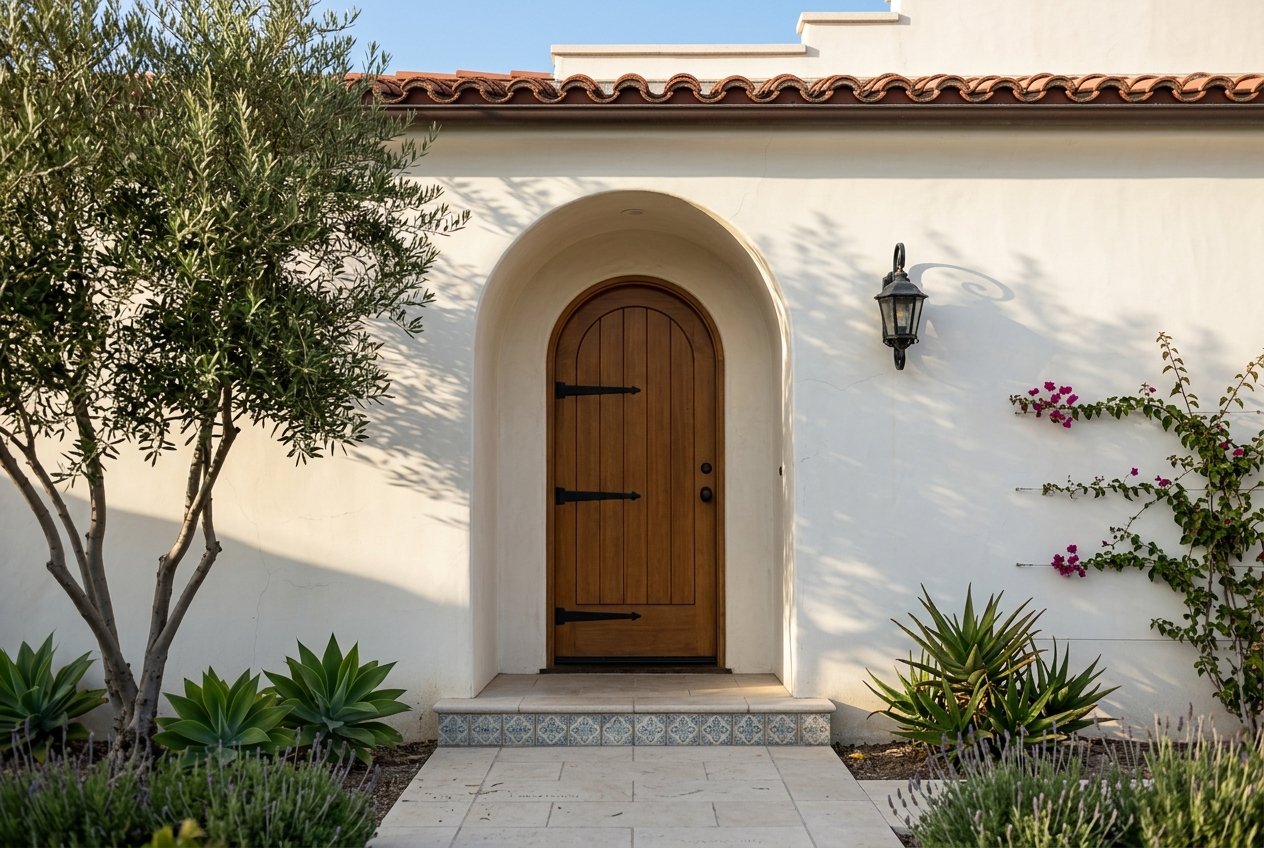
Spanish Colonial Revival homes usually include several recognizable features:
- Stucco or plaster walls
- Low-sloped clay tile roofs
- Arched openings
- Asymmetrical massing
- Patios, courtyards, or loggias
- Decorative wrought iron, cast stone, terra cotta, or tile
- Occasional towers or prominent entry elements
These homes often feel textured, sheltered, and warm rather than rigid or boxy. Even modest examples can have strong curb appeal because the style relies on shape, material, and detail more than sheer size.
What buyers should protect
If you are considering updates to a Spanish Colonial Revival home, the safest improvements are usually the ones that respect the original design. Los Angeles preservation guidance favors keeping the roofline intact, matching stucco repairs to original materials, and retaining features like arches and ironwork when possible.
Additions can work, but they should stay secondary to the original house. In practical terms, that means the new work should not overpower the home’s existing massing or erase the details that give it character.
Traditional revival styles add variety
Tudor, Colonial, Mediterranean, and more
Spanish Colonial Revival may be the signature look, but it is far from the only one. City Planning identifies a wide range of styles across Mid-Wilshire’s historic residential districts, including Tudor Revival, American Colonial Revival, Mediterranean Revival, French Revival, Craftsman, Prairie, Dutch Colonial Revival, and Minimal Traditional.
That mix helps explain why Mid-Wilshire feels visually rich. You may see one-story bungalows on one stretch and larger two-story residences nearby, all tied together by similar setbacks, mature landscaping, and a shared early-20th-century development pattern.
What defines the broader traditional character
Even when the houses vary in style, the neighborhood can still feel cohesive. In areas like Wilshire Park, Windsor Square, Carthay Circle, Carthay Square, Country Club Park, and Miracle Mile North, the streetscape itself plays a major role.
Broad lawns, parkways, mature trees, and consistent spacing between homes help create continuity. For buyers and sellers, that means curb appeal is not just about the house. It is also about how the home sits on the lot and contributes to the overall street scene.
Art Deco shapes the corridor feel
Where you are most likely to see it
Art Deco is part of Mid-Wilshire’s visual identity, but usually not as the main detached-house style. In the Miracle Mile context, Los Angeles City Planning highlights Art Deco traits such as vertical emphasis, parapets, stepbacks, geometric ornament, and iron grille work.
In Mid-Wilshire, those details tend to appear more in corridor buildings, apartment houses, and facade treatments than in single-family homes. So while Art Deco is important to the area’s character, it is more often part of the broader streetscape than the dominant residential language on a typical house-by-house basis.
The details that matter most
If you are evaluating an Art Deco or Deco-influenced property, pay close attention to the facade elements that create its visual impact. Features like stepped profiles, parapets, relief ornament, geometric metalwork, and distinctive entry treatments do a lot of the heavy lifting.
When those elements are removed or heavily simplified, the building can lose much of its personality. That matters for both long-term appeal and the way the property fits into its surrounding context.
Contemporary infill is the newer layer
How newer housing fits into Mid-Wilshire
Alongside historic homes, Mid-Wilshire also includes newer neighborhood-scale housing forms. Los Angeles City Planning points to duplexes, small-lot townhomes, ADUs, cottage-court concepts, and other low-rise typologies as part of the city’s contemporary infill landscape.
This newer stock adds another layer to the neighborhood. It also raises an important question for buyers: does the new construction feel appropriately scaled for its surroundings?
What to evaluate in newer projects
When you tour contemporary infill in Mid-Wilshire, focus on how it relates to nearby older homes. City design guidance emphasizes context-sensitive design, façade articulation, roofline variation, landscaping, and tree preservation.
In real terms, you will want to notice:
- Overall massing and whether the building feels oversized for the lot
- Setbacks compared with nearby properties
- Window patterns and facade rhythm
- The balance of hardscape versus planting
- Whether the project feels pedestrian-friendly from the street
For many buyers, the best newer homes are the ones that feel fresh without feeling out of place.
What buyers should notice before making an offer
Check for HPOZ review requirements
Some Mid-Wilshire homes sit within Historic Preservation Overlay Zones, or HPOZs. If a property is inside one of these districts, exterior renovations, additions, new construction, landscaping, and even paint may be subject to additional review.
That can affect your plans more than you might expect. A project that seems simple at first glance, such as changing exterior colors or reworking the front yard, may involve design review depending on the property and district rules.
Inspect the hardest-to-replace details
The most important architectural features are often the ones that are hardest to recreate well. City guidance repeatedly points to original roof materials, stucco or plaster condition, windows, arches, ironwork, porches, shutters, parapets, and the house-to-lot relationship as central to historic character.
When you walk a property, do not just ask whether it has been updated. Ask whether the updates respected the original design language, or whether important details were replaced with less compatible materials.
Think value-add, but stay sympathetic
In Mid-Wilshire, the strongest value-add strategy is usually not dramatic reinvention. It is more often a careful improvement plan that preserves the home’s architectural language, strengthens the streetscape, and keeps any additions or upgrades visually secondary to the original structure.
That might mean restrained landscaping, compatible entry improvements, or garage updates that support the home’s proportions instead of distracting from them. For buyers with renovation goals, this is where local design awareness can help you protect both character and long-term appeal.
Why architectural style matters for value
Architecture affects more than aesthetics. In a neighborhood like Mid-Wilshire, style influences curb appeal, renovation scope, maintenance priorities, and how easily a home blends into the block around it.
For buyers, understanding style can help you spot the difference between cosmetic updates and meaningful preservation. For sellers, it can help you present a home in a way that highlights its strongest period details instead of flattening them out.
In a market where character often drives emotional response, knowing what makes a Mid-Wilshire home distinctive can give you a real advantage. Whether you are drawn to Spanish Colonial warmth, Tudor texture, Deco drama, or a thoughtful contemporary infill design, the key is understanding how the property fits the neighborhood’s larger architectural story.
If you want help evaluating a character home, pricing a Mid-Wilshire property, or identifying smart upgrade opportunities before you buy or sell, Mark Gallandt brings a high-touch, data-informed approach to Los Angeles real estate.
FAQs
What architectural style is most common in Mid-Wilshire homes?
- Spanish Colonial Revival is the most consistently recurring style across Mid-Wilshire’s historic residential districts, especially among homes built in the 1920s and 1930s.
What neighborhoods shape Mid-Wilshire’s architectural character?
- Los Angeles City Planning highlights areas such as Miracle Mile, Miracle Mile North, Wilshire Park, Windsor Square, Carthay Circle, Carthay Square, and Country Club Park as key parts of Mid-Wilshire’s historic residential fabric.
What features define a Spanish Colonial Revival home in Mid-Wilshire?
- Common features include stucco or plaster walls, low-sloped clay tile roofs, arched openings, asymmetrical massing, patios or courtyards, and decorative materials like wrought iron and tile.
What should buyers check before renovating a Mid-Wilshire historic home?
- Buyers should confirm whether the property is in an HPOZ, since exterior changes, additions, landscaping, and paint may be subject to additional review.
What details matter most when evaluating a Mid-Wilshire character home?
- Original roof materials, stucco or plaster condition, windows, arches, ironwork, porches, shutters, parapets, and how the house sits on the lot are some of the most important details to inspect.
How does contemporary infill fit into Mid-Wilshire neighborhoods?
- Newer duplexes, small-lot townhomes, ADUs, and other low-rise projects fit best when they remain neighborhood-scale and show thoughtful massing, setbacks, landscaping, and facade design.